Your network connection has been lost, so you may experience media playback
issues.
Fantasia on Six Strings (or: How Guitar Became the Thing)
I grew up with music around me—but not in some mythic, prodigy-origin-story kind of way.
My grandmother wrote children’s songs from her preschool teaching—“wonderfully weird” little pieces, including one about squirrels that I still remember. My grandfather played sax. My mom played piano. There was music in the house.
Was anybody pro, any virtuosos, notable performances? No. Was it heartfelt and meaningful? Absolutely.
It was humble. But it was there. And if I’m honest, that was enough. That’s how it started for me.
I do remember the impact of The Beatles. Hearing that music did something to me. It landed. But my actual “music life,” in a practical sense, started with piano—first or second grade, lessons with a teacher across the street.
Did I practice enough? Definitely not.
I was drawing, playing sports, acting—just being a kid.
Music was in the mix, but it wasn’t the thing, my thing yet.
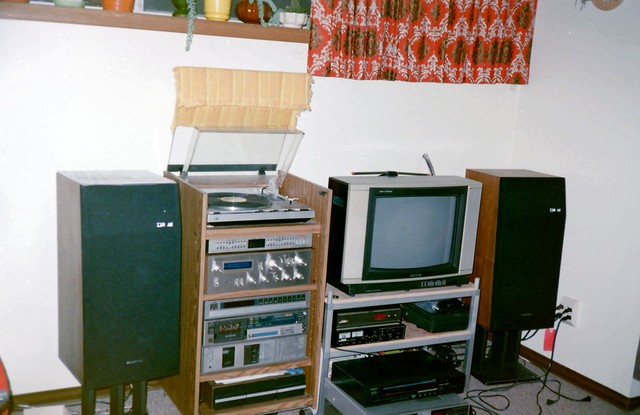
Credit: Jyd1965, My first stereo in the 80's, February 13, 2022, via Canuck Audio Mart.
The Night Everything Shifted
The pivot came from a friend—Matthew Blaylock, the best guitar player in the grade. The kind of player who was already playing with the high school bands while still in middle school.
I spent the night at his place, and at some point after everything else that happened that night, we got back and he picked up his gold Strat and started playing along with the radio.
Not copying.
Not figuring it out.
Just… improvising.
“I couldn’t believe he was making up fresh music and just jamming on top of the radio.”
That was it.
“I think this is what I really like.”
There was something about that moment—the immediacy, the expression, the way one piece of music could sit on top of another and still be its own thing—that just locked in.
First Guitars, First Identity
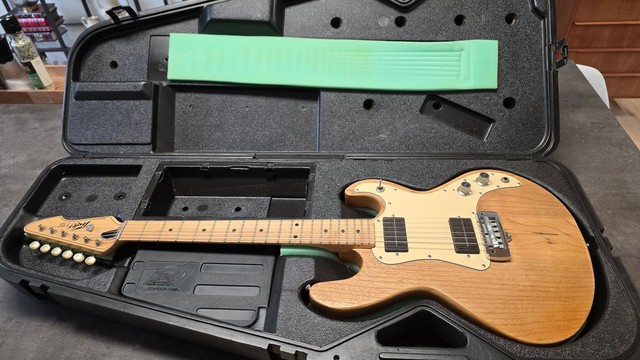
I borrowed a guitar for a while, then ended up with a Peavey T-15—my first real entry point. It had a speaker in the case and, honestly, it looked like kitchen furniture.
“My guitar looked like furniture… like a tool… part of something you’d build something else with.”
Which, in retrospect, feels exactly right. A functional tool for my soul and expression.
A little later came a Yamaha Strat copy (still have it, still covered in stickers), and almost immediately I knew I wanted to play bass too—so a Peavey T-20 entered the picture.
For a minute, that was the rig: two Peaveys and a Yamaha, running through a Yamaha amp, plus whatever effect pedals I could get my hands on.
And somewhere in there, quietly but definitively:
“I kind of really knew music was my thing… I think this has to do with the rest of my life.”
No roadmap. No plan. Just a feeling.
Abe's $12.50 blues
2:56
Fool's Fool
4:26
These Guys Can Play
1:02
LA Motion
1:20
More Jerod
0:49
The You You Used to Be
4:23
Key to the Human Heart
2:10
Meet the Man
1:12
St. Michaels Country Day School Lawn
1:04
The Four-Track Decision
There’s a fork-in-the-road moment I still think about.
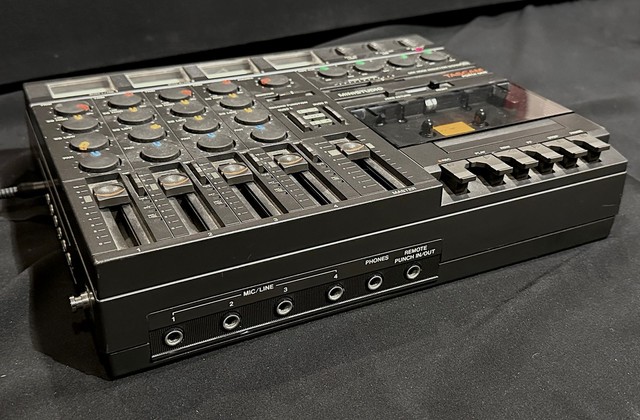
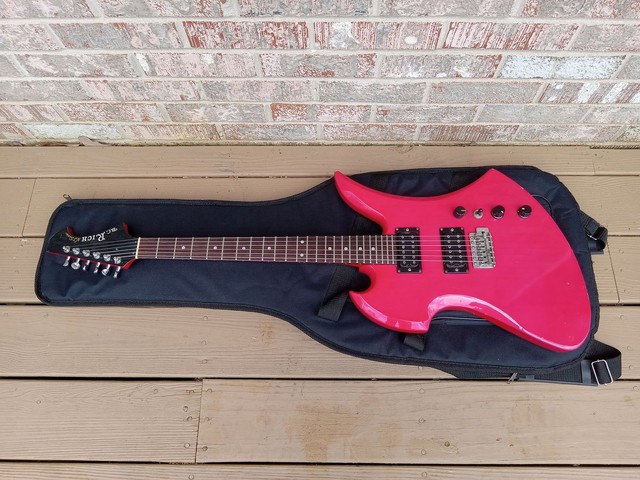
Do I buy the flashy pink guitar inspired by Steve Stephens / Billy Idol energy—or do I buy a four-track recorder?
I bought a Tascam Porta One Ministudio.
“My life changed because of that.”
That machine gave me something guitar alone couldn’t:
A way to build.
Layer.
Capture ideas.
Go deep.
“Creating my own music on four-track essentially saved my life.”
There was a lot going on in my family at the time—chaos, noise, things I didn’t have control over.
But this—I could control. A world I could create in and live in, all my own.
This was a way out.
Thoughts Of A Stranger
1:15
Beautiful You
3:36
Quoting Thoreau
0:23
The Other Half
4:34
No Canned Tomatoes
0:26
Ownyourown
6:31
When Planets Giggle
3:42
not my house, not my apple
1:24
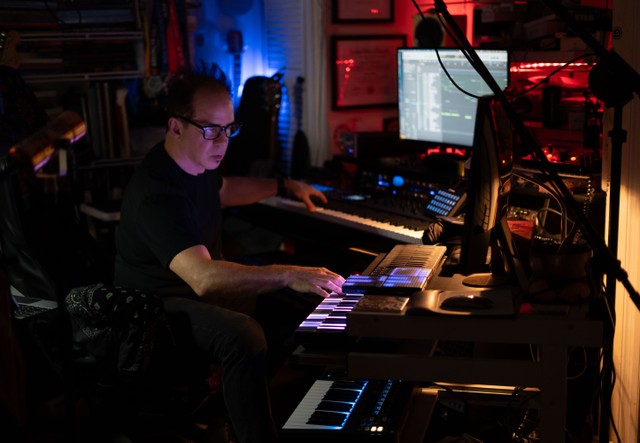
Getting Lost in the Process
That feeling—of being completely inside the work—has never really left.
“One thing that most excites me is getting lost in the process.”
Not the outcome. Not the credit. Not even the finished piece.
The process.
“What does it mean to be so in-depth with the process that that is all that matters?”
That’s still the question.
Whether I’m scoring a film, writing a song, or just improvising for the sake of it—that state of immersion is the feeling I keep chasing.
Pedals, Imperfection, and Real Sound
I got deep into pedals early. Probably too early.
“Please don’t buy a flanger as a first pedal.”
(Learned that one the hard way—thanks, Van Halen.)
But what stuck wasn’t the gear—it was the tactile experience.
Twisting knobs.
Chasing a sound.
Dealing with buzz, noise, imperfections.
“I really like taking audio from a performance in the analog world and manipulating with effects (analog or digital, hardware or software.).”
There’s something about the friction of physical sound-making—the struggle to match what’s in your head—that still informs how I work now, even inside a DAW.
I don’t want perfection.
I want something alive.
Fantasia as a Life Model
I used to release music under the name Schizophonic Music—a way of giving myself permission to explore different directions without apology.
One of my favorite classical terms is Fantasia, which means “in the whimsy of the composer”, the composer goes wherever they want.
That still feels like the right model:
“Fantasia on six strings, or all my strings with 52 guitar pedals… or whatever the heck that means.”
Just follow the thread, the invisible and invisible strings. See where they lead.
The Long Arc
At some point, the work gets real. You study. You put in the time. You try to get better.
And then, somehow, you look up and realize your playing is sitting next to people you grew up listening to. On Two Trains Runnin’, it’s my guitar playing next to Buddy Guy, Skip James, Son House and on The Lorraine Motel, Steve Cropper.
That part still doesn’t feel normal.
“Just make stuff that doesn’t stick out… make sure it does what it needs to do.”
Serve the music.
Serve the film.
Serve the moment.
That’s the job.
End of the Rainbow / Open Season
3:01
Robinsonville
0:55
We Got' em!
1:54
Meet the Man
1:12
Neshoba County
1:19
Still the Same Core
Guitar was the entry point.
The doorway.
But the deeper thing was always expression.
Connection.
Process.
Story.
And that original spark—watching someone improvise on top of the radio, realizing music could be alive in real time—that’s still in there.
Still chasing that.
Still going deep, getting lost in it.
Biography
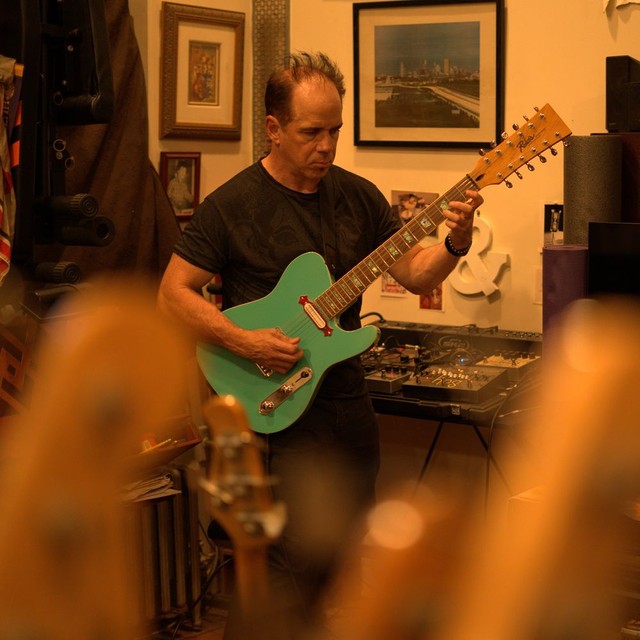
Sundance Fellow Christopher North (he/him, b 1969) is an award winning composer (Film, Theater, Dance and the Concert Stage), singer/songwriter (eclectic albums, songs for children’s TV and placements in Films), multi-instrumentalist (Carnegie Hall, Newport Folk Festival, CBGBs, Grammy award-winning recordings), conductor (Hollywood Chamber Orchestra debut, Carnegie Hall, Symphony Space) and producer. A Texan in NYC since 1997, he’s thriving in Brooklyn with over 20 genre crossing albums, scores to over 60 films (inc. award-winning and Grammy Nominated) and a growing opus of arts songs, chamber music and symphonic works. An enthusiastic educator and Associate Professor in the Berklee College of Music Songwriting Department SYNC TRACK, he has also taught at the 92NY since 1997. As a freelance sideman, he has played bass for Quincy Jones, with The Chicks (formerly the Dixie Chicks) and Rosanne Cash, in orchestras and on Broadway. He’s been heard as a singer (in choirs with the NY Philharmonic, on Grammy Award Winning Recordings), whistler (for Disney) and multi-instrumentalist on countless scores, albums, video games and commercials. A 2015 Sundance Institute Lab Fellow, collaborating brings out his best, for which VARIETY says he's a "notable asset” to work “well served by a fine soundtrack.” His favorite creation is his teenager Koi and his hobbies include photography, swimming in the ocean, collecting skull art and walking in cemeteries.