Your network connection has been lost, so you may experience media playback
issues.

Body in Motion FYC
BEST CLASSICAL COMPENDIUM - Kelly Hall-Tompkins, Los Angeles Chamber Orchestra, Leonard Slatkin
BEST CLASSICAL COMPOSITION - Jeff Beal, "Body in Motion"
body in motion I Head Above Water
9:55
body in motion II Breathing
5:50
body in motion III Running
5:45
four score I The Hero
7:55
four score II The Lovers
8:07
four score III The Jester
6:11
PDF score
Scrolling Score Video
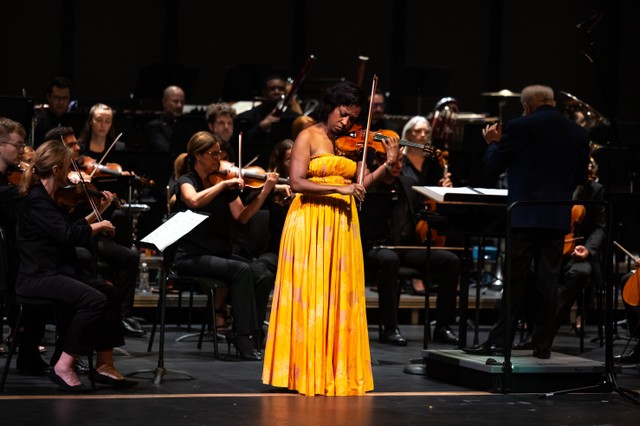
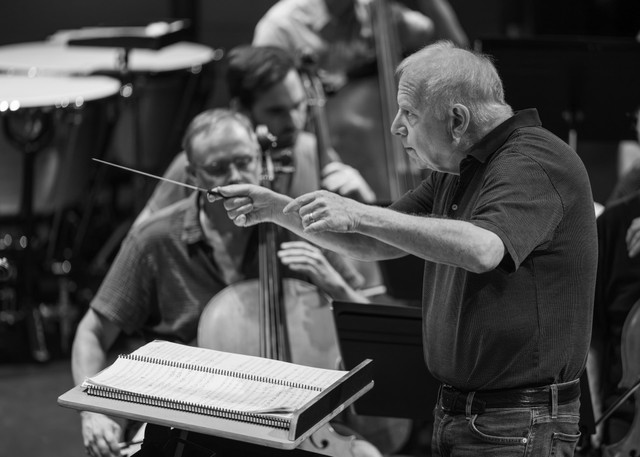
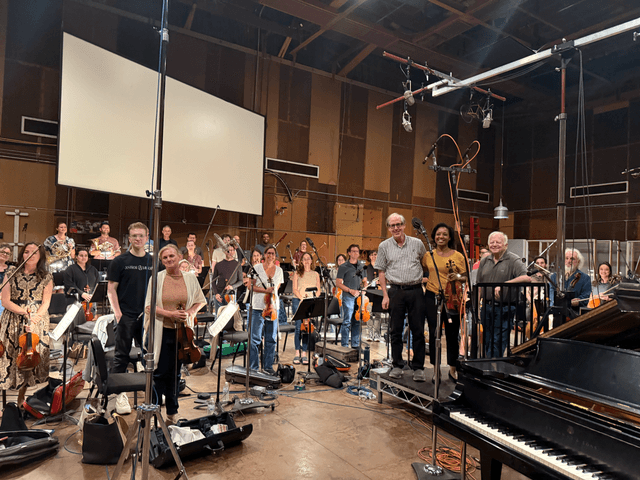
Body in Motion is a recording of two new vibrant concert works by five time Emmy award winning composer Jeff Beal. Featuring the Los Angeles Chamber Orchestra, conducted by six time Grammy award winner maestro Leonard Slatkin with violin soloist Kelly Hall-Tompkins, this recording captures a special reunion of these artists and good friends. It was recorded in Dolby Atmos at the Sony Pictures soundstage in Los Angeles in 2025.
The album leads off with Beal’s violin concerto, Body in Motion, inspired by the constant, fluid motion of water and the imagery of the “orchestra and soloist as active natural forces.” The three movements encapsulate contrasting motion. “head above water” evokes a swimmer, or soloist, bobbing above turbulent waters. “breathing” reflects the slow, deliberate persistence of life, and “running” is an all out romp. “Here the violin is a jazz soloist, soaring in the sky and skating across of bed of syncopations and counter rhythms from the orchestra”
The concerto was written for the gifted violinist Kelly Hall-Tompkins, named a “New Yorker of the Year” by the NY Times, as the founder of Music Kitchen-Food for the Soul, a program which brings classical music to the unhoused. Beal describes her as a “passionate performer, who seems to never wish to sit still artistically, nor shy away from intense effort.” Beal and Hall-Tompkins are both graduates of the Eastman School of Music, and met as fellow honorees at the school’s Centennial Awards in 2022. That evening they found themselves planning a collaboration, which took shape once they returned to New York City. Body in Motion was premiered by the St. Louis Symphony Orchestra, conducted by maestro Leonard Slatkin, a friend of Beal’s and champion of his music, to a sold out and enthusiastic audience in January 2024.
Of that performance, Chris King of the St. Louis American wrote “the world premiere was a treat even by the rarified standards of world premieres. Body in Motion calls for virtuoso violin playing—its violin solos explore the history of music, and Hall-Tompkins proved a masterful teller of those stories.” Benjamin Torbert of KDHX commented that “Audiences will often adjust gingerly into standing ovation; Hall-Tompkins drew instantaneously upright bodies in motion. The piece and the performance were fantastic.”
Four Score is a concerto for orchestra written in honor of maestro Leonard Slatkin’s 80th birthday. Beal wanted to compose a symphonic work which celebrated their shared roots in Los Angeles and film music. Leonard’s parents, Eleanor Aller and Felix Slatkin, were founding members of the Hollywood String Quartet, as well as principal cellist and concertmaster at both Warner Brothers and Fox studios. Beal’s career includes many unique and diverse compositions written for the screen, including his lauded scores for Ed Harris’ film Pollock, the ground breaking dramatic HBO series Rome and comedy television series such as Monk and Ugly Betty.
Beal wondered “what would a concert piece sound like, where I feel free, even perhaps emboldened to use some of the musical language I have employed in my 30 years writing for the screen?" Beal is a composer who does not find a divide of high or low art in his practice. “I’ve never really liked or understood silos in art. I consider myself fortunate to have to composed for both the screen and concert stage. “
The movements of Four Score are musical studies of three particular narrative archetypes often found in film. "The Hero" channels a bit of the bravura of John Williams’ and Jerry Goldsmith's rich adventure scores, and is intended to inspire and thrill. "The Lovers" explores the theme of romance and longing, beginning with solos for the first violin and cello, which is a direct nod to Slatkin's parents Eleanor and Felix. Finally "The Jester" delights in comedic surprise, careening through mazes of syncopation, ending in a joyous coda in a 7 meter. Beal notes that these three movements seemed to reflect aspects of his friend’ Leonard’s engaging personality. Recording this work in Hollywood, with the brilliant musicians of the Los Angeles Chamber Orchestra, many of whom recorded on Beal’s scores over the years, was a celebratory homecoming.