Your network connection has been lost, so you may experience media playback
issues.

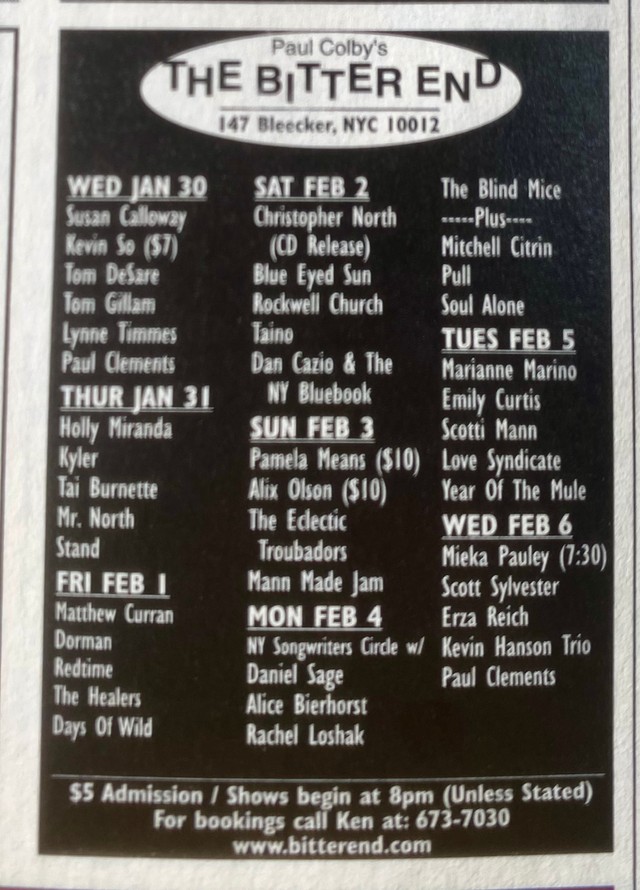
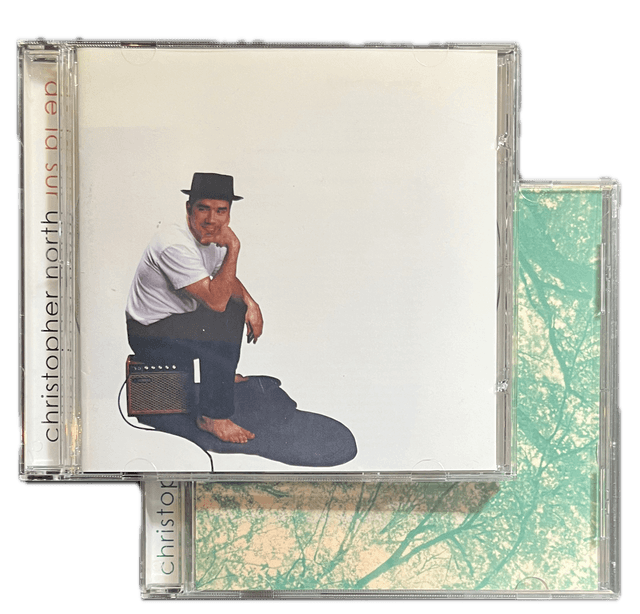
02.02.02 — Two Records, One Night
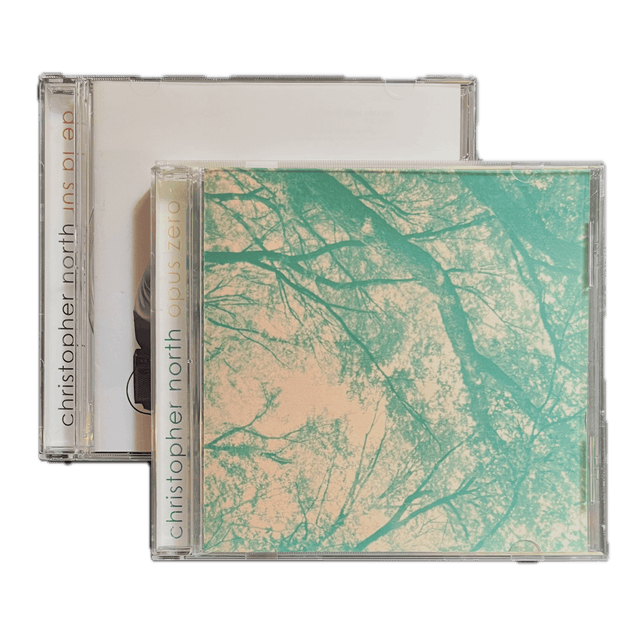
de la sur
01 Prelude (only Thinking)
0:41
02 The You You Used to Be
4:23
03 Security
5:28
04 Fool's Fool
4:26
05 Beautiful You
3:36
06 If I Was A Rocket Scientist
5:01
07 The Other Half
4:34
08 The Other Half (outro)
0:23
09 Ownyourown
6:31
10 Itchy
4:43
11 Monster
3:04
12 Testimony
5:06
13 Testimony (outro)
0:39
14 When Planets Giggle
3:42
15 So Out It Turns
4:40
16 Cherish
3:29
17 Be Patient
0:53
opus zero
01 eve of Eve
6:28
02 First Song
0:55
03 Spleen
2:33
04 Beautiful, You
1:48
05 Elegy
10:23
06 Smarachakra
9:55
07 Seed
7:09
08 Overture
4:17
09 Itchy
4:26
10 HOOD
3:39
11 Point
1:21
12 Ballad
3:13
13 bcdfga
3:13
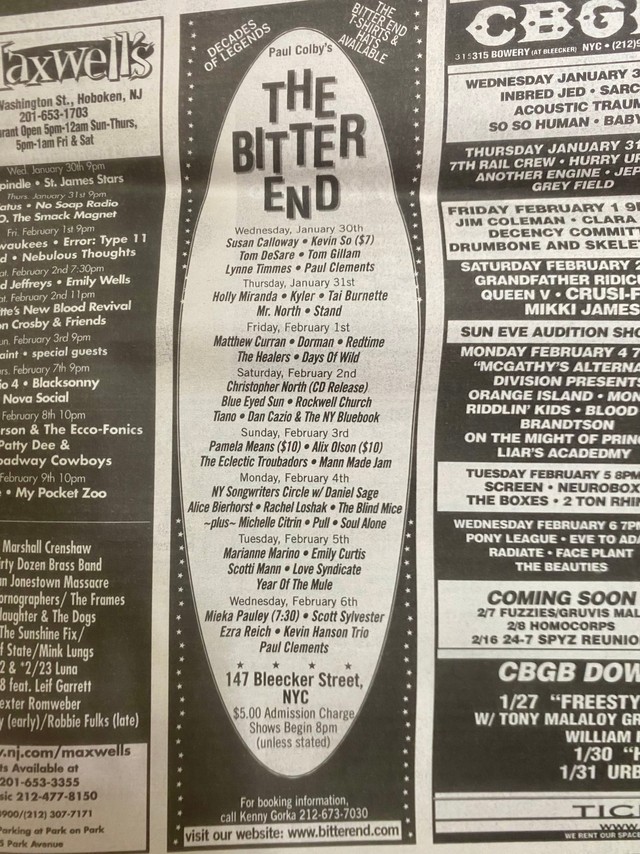
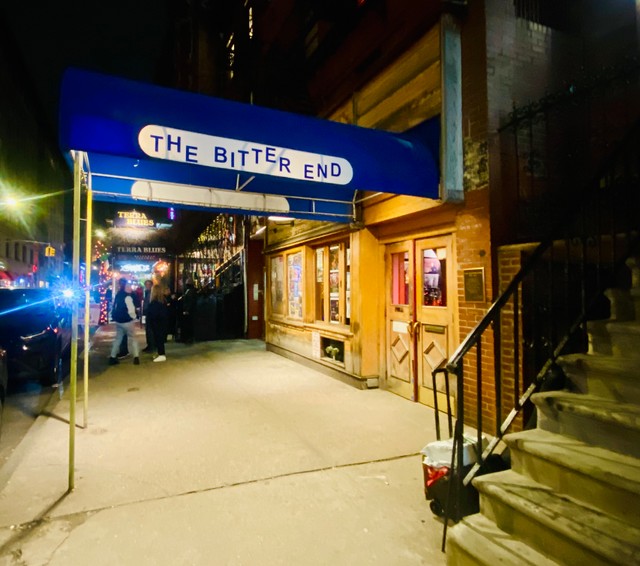
The Bitter End, NYC — Sold Out
by Christopher North
There are dates that feel like they choose you.
02.02.02 was one of those.
Two records.
One night.
A sold-out room at The Bitter End.
And a whole lot of life packed into the years leading up to it.
Moving to New York (and Starting From the Side)
I moved to New York City in June of ’97 to be a songwriter.
“Everything else was a nice way to help pay the bills.”
So I played bass.
A lot of bass.
Different bands, different clubs, learning the ecosystem from the inside:
“My path was sideman first—to get into the venues, get to know them, get familiar with everybody.”
That was the education. 98, 99, 2000, 2001—just showing up, playing, learning how rooms work, how people work, how music actually moves through a city.
I met guitarist Bryan Vargas in the summer of '97, Theater for the New City Musical. I met Triplet Threat Philip Clark (Keys, Vx, Sax) and Drummer David Penna when I played bass for Rick Kelly's Band. I met cellist Grace Lin and all the others on Opus Zero playing in Orchestras. Vocalist Debbie Magidson was a guitar student.
95 Lexington — The Apartment Studio
Meanwhile, I was building something else.
Apartment 1A.
95 Lexington. Right off the lobby of a half block wide, 6 stories tall apartment building.
Not exactly ideal for recording an album.
So I built a solution:
“A DIY hard ware store constructed L-shaped, 7 or 8 foot plywood wall covered in Acoustic Foam, covering the door and adjacent wall … and used my closet and all the clothes to block the sound from the Lobby”
It was part studio, part survival mechanism.
“Microphones all around me, headphones running through the hallway…”
And my poor Martin guitar:
“I’m knocking my brand new guitar on the closet every time.”
But that’s where most of De La Sur was made.
Not in a studio. In a hallway.
In between lots of life, in between and all around.
4 songs featured bandmates Bryan Vargas, Philip Clark and David Penna.
Songs With Long Memory
Some of those songs didn’t start in New York.
They came with me.
“Security was a song I wrote in college.”
"Other Half 1st Verse and Chorus composed in Deep Ellum, awaiting sound check."
“When Planets Giggle—I wrote that on a Hike in Big Bend.”
Other fragments from Dallas and all over Texas. From earlier versions of myself.
Then recorded “in earnest” in New York.
That mix—past and present—was already baked into the record.
Opus Zero — Before Knowing What You Are
At the same time, I was working on something else entirely.
A classical record.
Funded partly through a recital at 92nd Street Y, where I was teaching:
“A chunk of work before I even know really what I am.”
That became Opus Zero.
String quartet. Art songs. Works from Dance collaborations.
Pieces about intimacy, structure, identity.
Different language. Same core.
Variations on a Theme (Before I Had the Words for It)
Without realizing it, I was building a system.
Same material. Different expressions.
“Beautiful You… classical version and a pop version.”
“A prog rock song… reimagined as a piano quintet.”
I didn’t have the term for it yet—but this was the beginning of something:
“Very genre-divergent things side by side.”
That would later become central to how I think about scoring, songwriting—everything.
9/11 — The Pause
Then everything stopped.
September 11 attacks
“It put a pause on everything—gigs, money, survival.”
All the plans shifted.
Release timelines.
Shows.
Momentum.
Gone.
Choosing the Date
But as my birthday approached—and with my long-standing love of the number 2—I landed on something simple:
“Two albums for 02.02.02.”
It just felt right.
Even if nothing else did.
NY Press
CN2025
The Show
Somehow, we pulled it together.
Barely.
“Two weeks before the gig, we still didn’t have final CDs.”
We rushed a short run—100 copies, wrong colors, whatever it took:
“A kind of special batch.”
And then:
The show.
Sold out.
At The Bitter End.
The Risk
We didn’t play it safe.
Not even close.
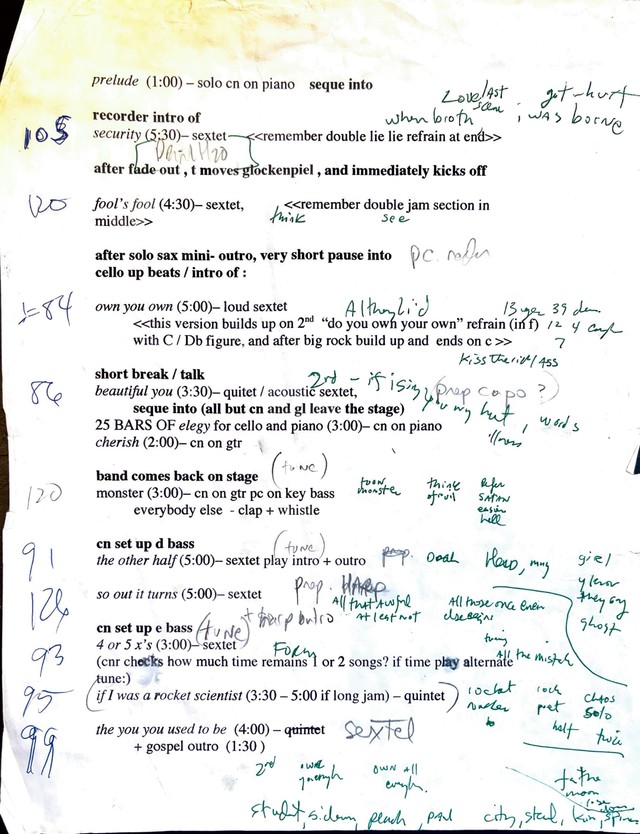
“Itchy… a multi-section 7/8, 9/8… only played once.”
And we played it live.
“How do you pull that off? …and we actually did it.”
That’s still one of the things I’m proudest of.
Not perfection.
Execution.
The Glue
Looking back, what stands out isn’t just the music.
It’s the glue.
All the energy.
All the people.
All the small decisions stacked on top of each other.
“A deep dive into learning a bunch of stuff by putting out two albums.”
Recording.
Producing.
Collaborating.
Leading.
Letting go.
What I Didn’t Know Then
At the time, I didn’t realize what I was building.
But it became a calling card:
“Take the same tune and come up with vastly different kinds of music.”
That idea—variation, reinterpretation, elasticity—became foundational.
For film scoring.
For collaboration.
For everything that came after.
The Aftermath
I sold some CDs.
Gave a bunch away.
“The rest ended up in my mom’s closet… and eventually got tossed.”
Which is honestly perfect.
Because the real value wasn’t the objects.
It was this:
“Everything I learned about life and songs and recording up to that point.”
The Throughline
Two records.
One night.
A room full of people.
Years of work leading to a single moment where it all had to hold together.
And it did.
Not because everything was perfect.
But because it was alive.
Biography
Sundance Fellow Christopher North (he/him, b 1969) is an award winning composer (Film, Theater, Dance and the Concert Stage), singer/songwriter (eclectic albums, songs for children’s TV and placements in Films), multi-instrumentalist (Carnegie Hall, Newport Folk Festival, CBGBs, Grammy award-winning recordings), conductor (Hollywood Chamber Orchestra debut, Carnegie Hall, Symphony Space) and producer. A Texan in NYC since 1997, he’s thriving in Brooklyn with over 20 genre crossing albums, scores to over 60 films (inc. award-winning and Grammy Nominated) and a growing opus of arts songs, chamber music and symphonic works. An enthusiastic educator and Associate Professor in the Berklee College of Music Songwriting Department SYNC TRACK, he has also taught at the 92NY since 1997. As a freelance sideman, he has played bass for Quincy Jones, with The Chicks (formerly the Dixie Chicks) and Rosanne Cash, in orchestras and on Broadway. He’s been heard as a singer (in choirs with the NY Philharmonic, on Grammy Award Winning Recordings), whistler (for Disney) and multi-instrumentalist on countless scores, albums, video games and commercials. A 2015 Sundance Institute Lab Fellow, collaborating brings out his best, for which VARIETY says he's a "notable asset” to work “well served by a fine soundtrack.” His favorite creation is his teenager Koi and his hobbies include photography, swimming in the ocean, collecting skull art and walking in cemeteries.